
1
2
3
Background
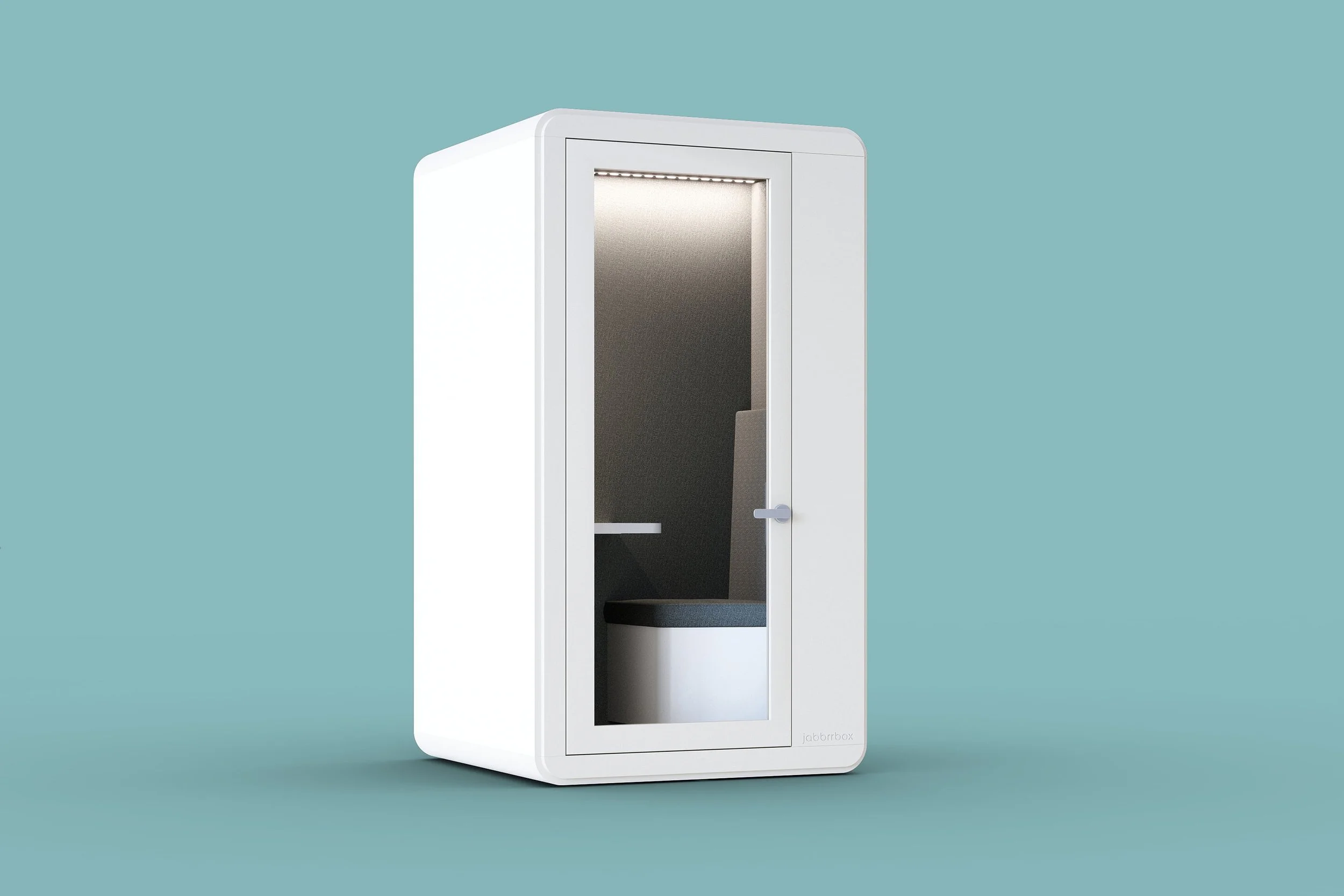
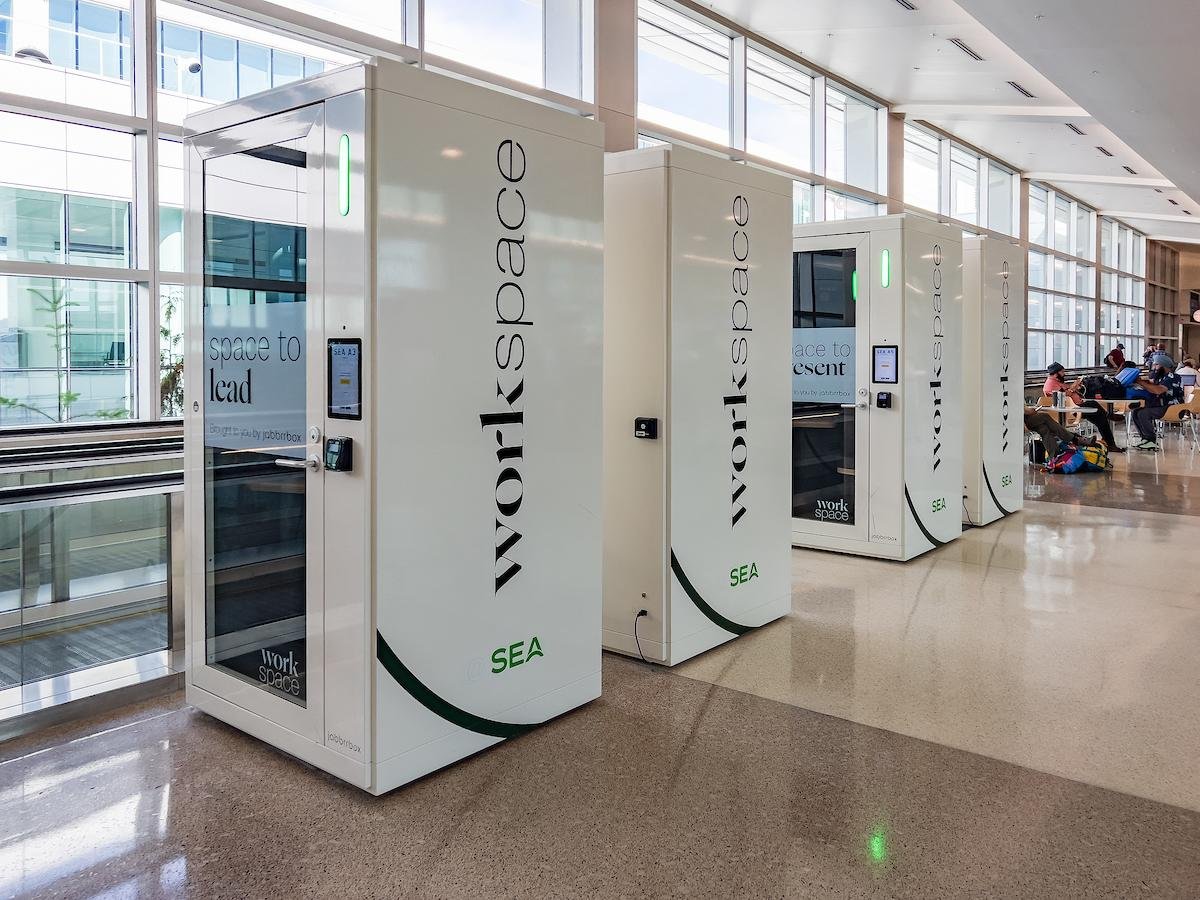
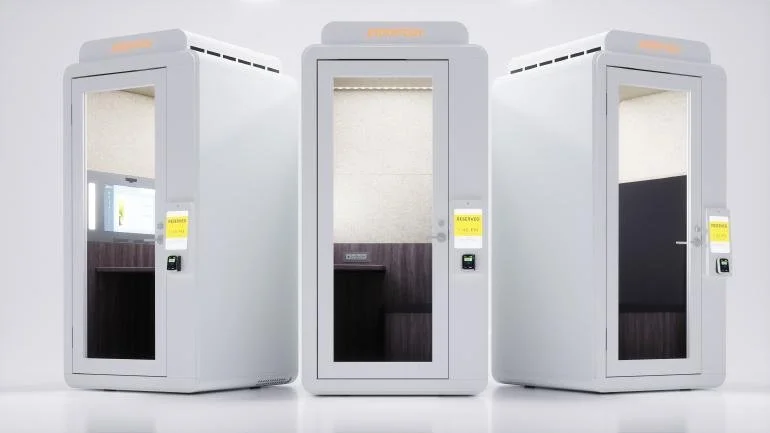
jabbrrbox provides enclosed, reservable workspace pods placed in high-traffic environments like airports, train stations, open plan offices, and hotels. These pods are designed for private calls, focused work, and short bursts of productivity in otherwise chaotic spaces.
Their customers use them because they offer visual and acoustic separation from the outside world with a clean and predictable environment to take a meeting or concentrate.
Problem
Workplace audio can be inconsistent and room sound can be uncontrolled. Introducing unfamiliar accessories to a user’s device can lead to driver issues or lost productivity.
There is a distinct lack of continuity between bookings. User preferences reset between every pod use, preventing sense of ownership, slowing initial setup, and diminishing the advantages of being brand loyal.
Fragmented system feedback and control mechanisms within the pod can be distracting. There is limited clarity around core functionality such as microphone input status or network connection health which forces reliance on visual confirmation and frequent attention shifts.
Brand Context
Basis for redesign
Opportunity
By crafting a voice-optimized and sound treated environment, jabbrrbox can elevate its service offerings by helping to alleviate any extraneous stress that accompanies uncertainty. Sometimes when working, we don’t know when impromptu calls will need to happen and when they do, neither the loud airport terminal or the coffee shop that happens to be featuring a local DJ that day just won’t cut it. The peace of mind that comes from knowing you can answer a call at any time with flawless, uninterrupted audio is a core tenant of what sets jabbrrbox apart. This is achieved by treating each space with absorption, diffusion, and strategic microphone placement, and by deploying Active Sound Design principles similar to those present in modern ICE and EV vehicles today. These methods will not only mask perceptual variance from external and mechanical sources tuned to the pod’s noise profile (cancellation), but will also offer the user the chance to select soundscapes to play based on their work style or current work session intentions (enhancement).
By prompting user login at the start of a work session, jabbrrbox could facilitate the immediate recall of a host of potentially personalized settings such as the user’s preferred room lighting, concentration soundscapes, seat configuration, pod-native equipment, notification settings, and more. Saving these encourages repeat usership as predictability, a core tenant of initial user motivation, is further enhanced.
By introducing a set of intent-driven states, such as Call, Focus, Light Work, and Intense Work, jabbrrbox can simplify the session environment by letting the user’s chosen state govern the system feedback across different modes. These presets will dictate settings like what soundscapes and lighting correspond with the user’s intentions and when to have notifications delivered via chimes and when via less intrusive means such as rhythmic vibration patterns. All feedback should be low amplitude, temporally brief, and consistently mapped to specific system states to enable fast user learning and adhere to jabbrrbox’s core tenant of facilitating productivity. Transitions between modes can be reinforced through subtle audio crossfades and gradual shifts in feedback density, creating a cohesive and predictable interaction model that supports continuous awareness while minimizing cognitive overhead.
Outcome
Refining pod audio allows jabbrrbox to extend above and beyond simply offering a quiet space. It will excel at every auditory situation including achieved complete silence, clear communication on calls, and fully customizable, productivity-oriented, synthetic sound.
Increasing continuity between sessions transforms jabbrrbox pods from being a transient space of utility into an experientially-rich space of luxury.
Implementing an intent-driven structure will enable sustained focus and further personalization, while ultimately maximizing multimodal integration and minimizing user reliance on visual interfaces.


Customer Experience Journey
The following customer journey contextualizes the opportunities outlined above with the current experience jabbrrbox users will have. It begins to map out where sound can achieve these goals and how we can ensure that it is the user’s perspective that is the primary driver of design decision-making. Once established, we can begin crafting these cues to color the emotional highs of the jabbrrbox pod journey while easing the friction that may arise with any product interaction.
Stage
Discovery
Use (collaborative work)
Action
Entry
Configuration
Use (asynchronous work)
Completion
Post-use
Sees pod in public space
Reserves pod
Sets up pod for upcoming session
Joins meeting from pod
Works independently
Disconnects and leaves
Reflects on experience
Current UX
Lighting inside appears uninviting, equipment is bare
Abrupt transition from booking to immediate working on the clock.
Manual fragmented controls across factors like equipment, audio, lighting, temperature, seat, etc.
Uncertainty about audio quality/functionality until already connected with collaborator (too late).
Silent but sterile. May experience bleed from outside surroundings.
User experiences a hard stop without input from the pod.
Unable to distinguish from competitor’s offerings. Potential dread regarding pod setup again on next use.
Future UX
Internal and external lighting to indicate availability and convey viability of lengthy exposure
Opportunity for Arrival Moment. Sound cues both for entrance and for welcoming returning user.
Preloaded profiles for standard setup or preset modes based on session intention. Both with options for more granular setup if desired.
Real-time feedback via system sound and haptics.
Professional room treatment and option for ambient active sound. Time guidance administered with haptics to avoid impeding user focus.
Subtle de-scalation of any soundscapes active, reset of lighting, and low-frequency completion chime to ease the user’s transition out from productivity back to traveling, socializing, etc.
Opportunities for personalization by having jabbrrbox remember the intention state the user chose as well as other environmental factors.
Product Requirements
These requirements define how a redesigned jabbrrbox pod uses sound and haptics to replace visual friction and create a more legible, responsive workspace. Each interaction is intentionally mapped to a clear sensory output in order to ensure users can interpret changes in state such as calls, notifications, time, transitions, etc., without needing to look away from their work. The scenarios below focus on the most critical moments where multimodal feedback can meaningfully improve the experience.
Environment Initialization
Given a user logs into a pod, When their profile loads, Then lighting, audio EQ, UI brightness, pod-native equipment all default to their preferences. Previously selected intention states and favorited soundscapes are recommended to the user.
Call Preparation Feedback
Notification & Error Handling
Given the user had previously not selected a Collaborative Intention session but now joins a call, When their microphone is set to jabbrrbox’s native microphone and is muted/unmuted, Then a paired sound + haptic signal confirms state.
Given the user had previously selected a Collaborative Intention session and now joins a call, When their microphone is set to jabbrrbox’s native microphone and is muted/unmuted, Then a haptic signal affirms functionality.
Given an incoming notification/error, When the user is in a Light Work session, Then an audible chime triggers.
Given an incoming notification/error, When the user is in a Focus or Collaborative session, Then a subtle directional haptic cue is triggered instead of sound.
Given an incoming notification/error, When the user is in an Intense Work session, Then no trigger occurs.
Time Awareness
Given a session has 15 minutes remaining, When the threshold is reached, Then a gradual haptic pattern begins.
Exit Transition
Given the session is not extended, When the user opens the door, Then audio fades, lighting shifts, and system resets for next user.
Prototype & Cues
1 Login Page
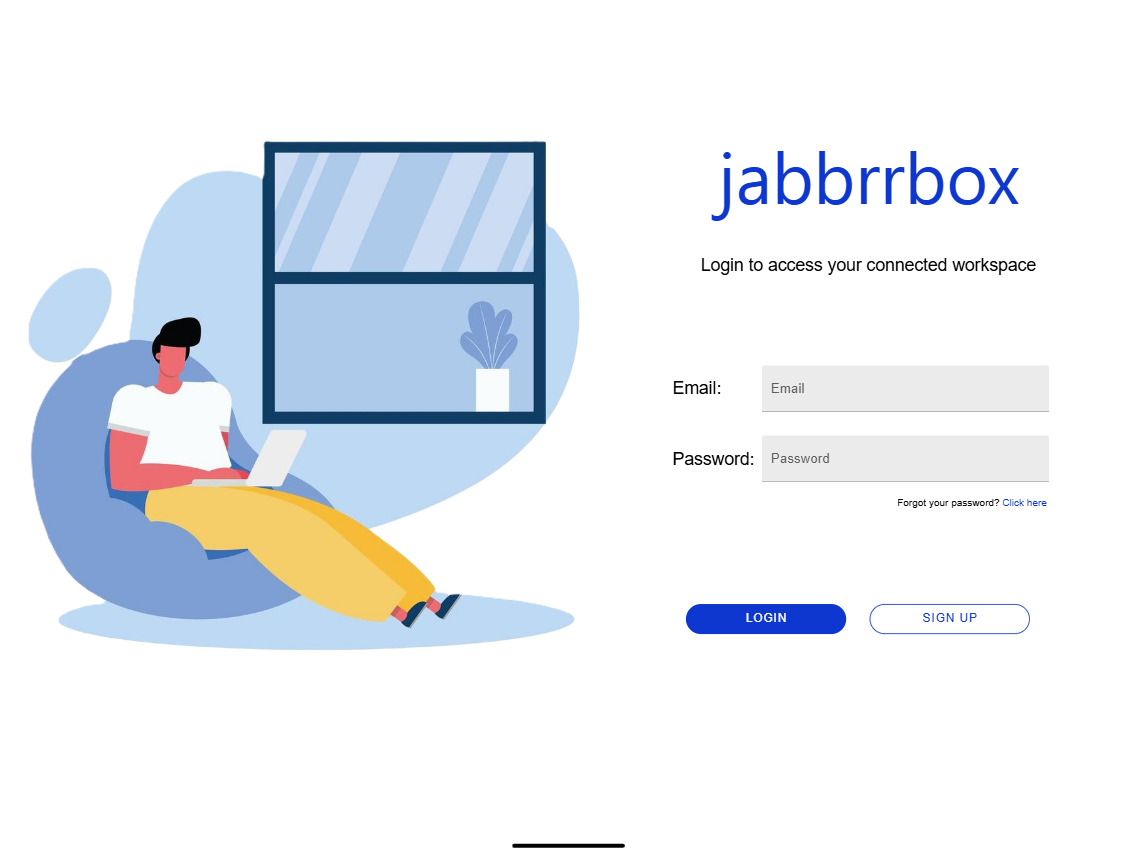
The user is first prompted to login or sign up, signaling jabbrrbox’s intention to facilitate a personalized and luxury experience. The user is greeted with a Welcome Tone designed to reassure the user of their decision to enter the pod, regardless of whether that person is a first-time-user without any familiarity, or a returning user eager to get to work. Additionally, the lighting should change from marking pod availability to a transitory state pending booking.
Since this chime is the first thing the customer will hear in their interaction with jabbrrbox, I wanted it to feel open and inviting rather than emotionally prescriptive or overly resolved. Using primarily a Bsus4 chord after an allargando intro of D# notes, this suspended harmony allows the sound to establish a sense of arrival while maintaining subtle anticipation, signaling that the experience is just beginning.
I opted for the tone present because I enjoyed having both the warmth of the rounded D# intro into the thick, bright sort of sudden chord. In my mind, this was reminiscent of a splash, like someone taking the jump into jabbrrbox ready to dive into their work.
The following images seek to immerse you in the experience of a returning user, outlining the pod’s setup flow and core UI interactions, while focusing primarily on how users will initialize the experience. The screens are designed to introduce the concept of intention-driven system states while particular attention is given to how sound cues are embedded into each step, reinforcing actions and reducing reliance on visual confirmation. Each screenshot is paired with a brief explanation of the corresponding audio feedback, detailing its timing, purpose, inspiration and relationship to user input.
Sounds produced using a Sequential Prophet Rev-2 and recorded foley.
2 Scheduling Page
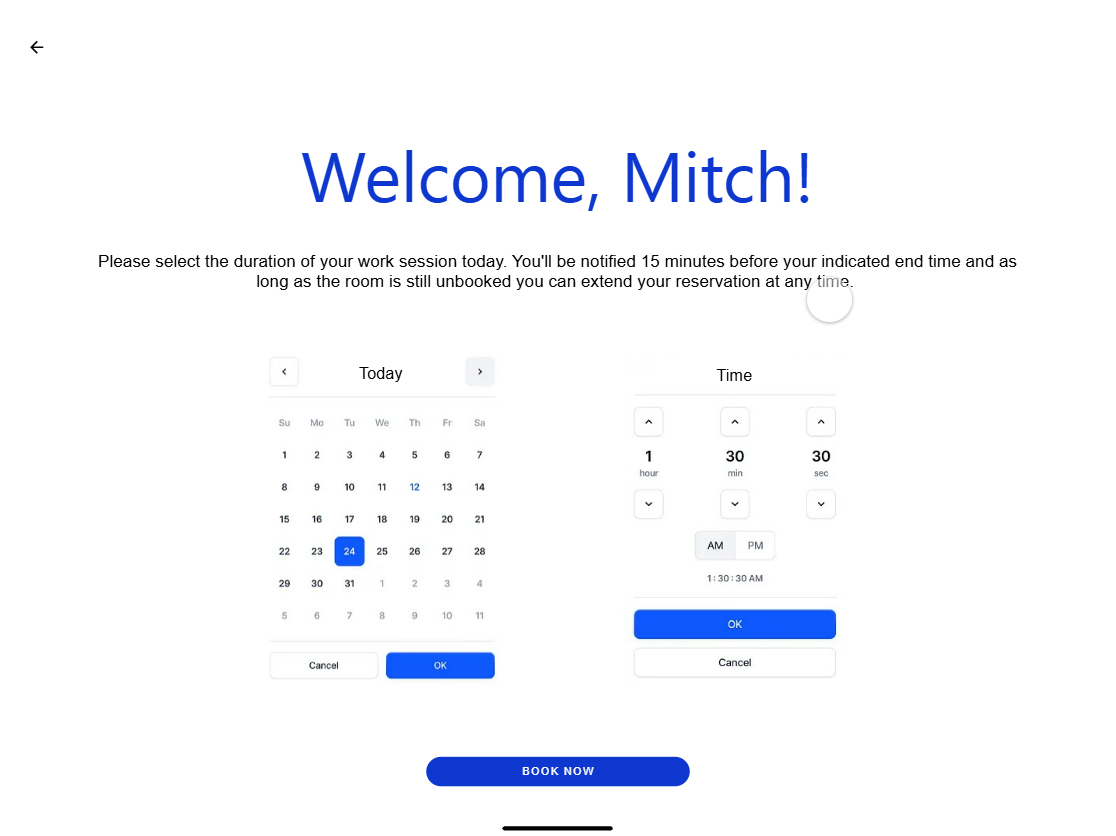
Once identified, the user is led to schedule a work session. The transition from Login Page to Scheduling Page is marked by a Recognition Tone, designed to celebrate the user’s presence and encourage them to continue returning.
Since this chime plays after the user logs in to the pod, I wanted it to feel simple, affirmative, and quietly rewarding. The major third interval that gives this cue its harmonic basis combined with the emphasis on the downbeat makes this feel like an auditory checkmark of sorts. I liked that this reflects the completion of the small but meaningful hurdles leading up to this moment (deciding you need to get something done, getting to a place where you will be able to work, and of course, then actually remembering your password) without drawing attention away from what comes next. It signals that everything is now in place, allowing the user to shift fully into focus with a sense of clarity and readiness.
3 Equipment Setup Page
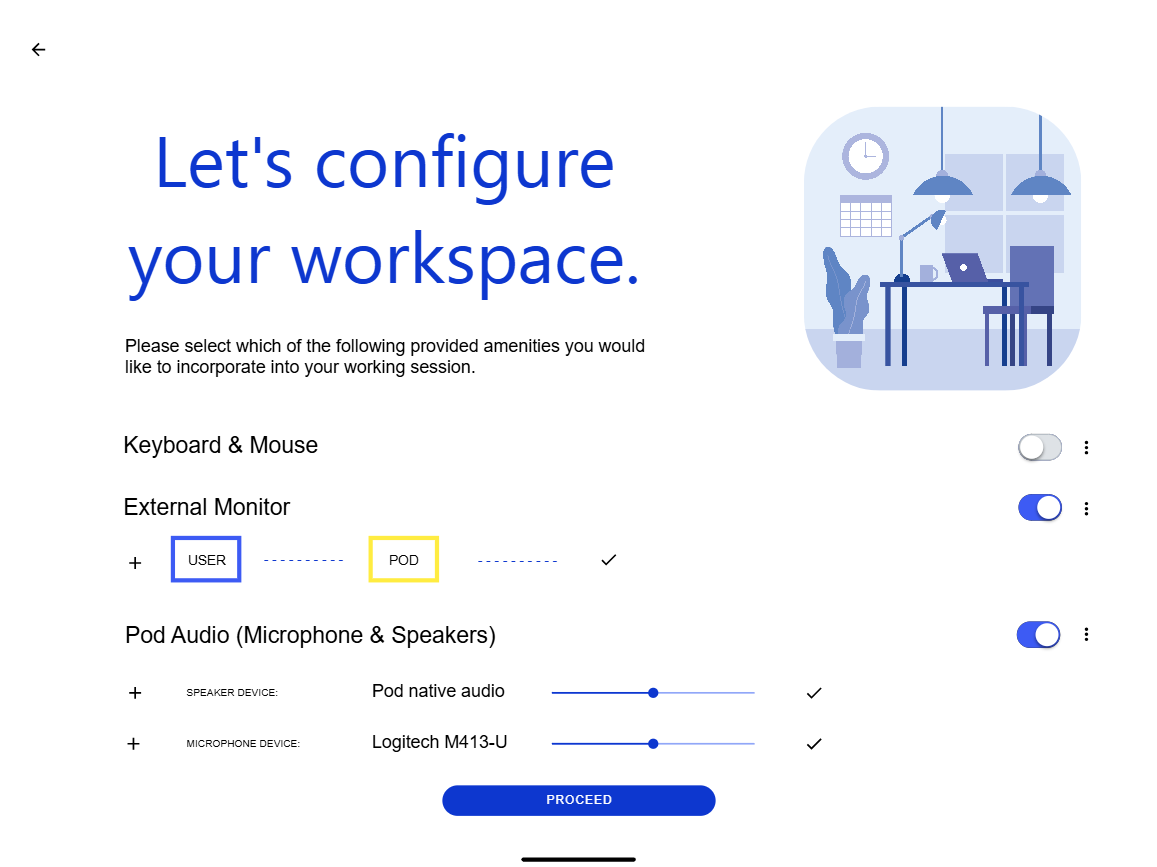
This is the page many people dread when it comes to working in any environment besides their standard office or work-from-home setup. To ease this, the toggles on the right hand side are pre set based on the user’s historical preferences, while the microphone and speaker sections are outfitted with input/output monitoring. The connectivity of keyboard & mouse, though deselected in this image, can be affirmed via vibrotactile haptic feedback, while the pod-native external monitor will use industry-standard screen framing to show liveness and positioning.
The melody in this chime is an alternating root and fifth, D# and A#. This interval is one considered to be void of any and all tension and this is how jabbrrbox aims to make the user feel during the objectively contentious equipment setup process. The relation of the two notes and their predictable oscillation between each other is one that reads of stability and decidedness while the variety across the ADSR present ensures the user is setup for success regardless of what audio they will hear during their session.
4 Intention-Setting Page
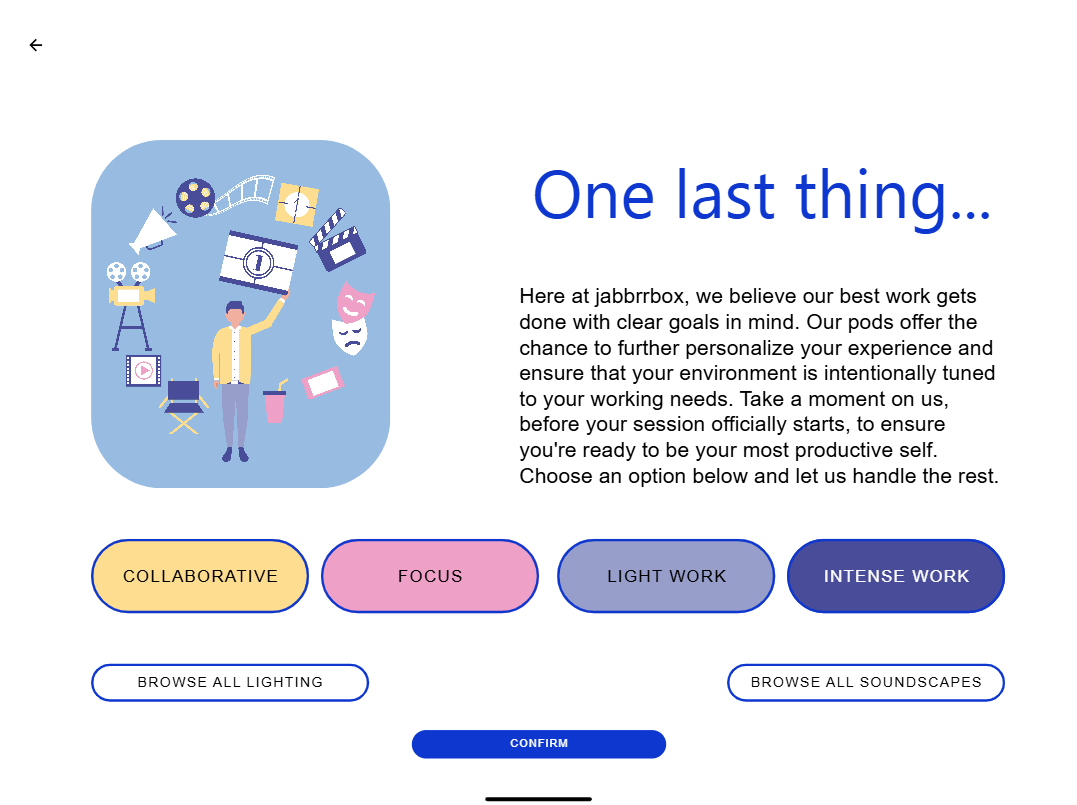
This is the juncture at which users are given the chance to optimize their pod for the intentions they may have for that work session. This is a crucial moment at which jabbrrbox can demonstrate its distinction from competitors and stand out as a premium option in the market. As I approached these, I ensured that timbral choices such as soft attacks, filtered textures, and a lack of sharp transients were maintained to make it as conducive to productivity as possible. There are also buttons included for manual customization. Below are a set of sample soundscapes based on the intention the user selects.
This first sample soundscape prominently features a D#maj9 with a cluster of dissonance at the top of the chord in the major 3rd and the 9th. These being voiced in such close proximity where they otherwise are not, contributes to an almost ethereal sensation, helping transport the user into a headspace concerned with focus rather than the vast world they just entered in from.
For Heavy Work, I filtered the tuned frequencies from generated white noise to center around G and its harmonic series. Unlike the other two types of chosen intentions, I wanted Heavy Work to exist in a lower register and with fewer chordal extensions to emphasize concentration and reduce cognitive load even further.
For the Light Work sample soundscape, I opted for a frequency-rich pad layered over a granular resynthesis of itself. This created a beautiful texture of randomly emerging pitches that almost emulate an orchestra tuning ahead of a performance. This soundscape comes across more active than the others as the intention of Light Work indicates a user threshold willing to accept more color in their audio.
5 Static Page
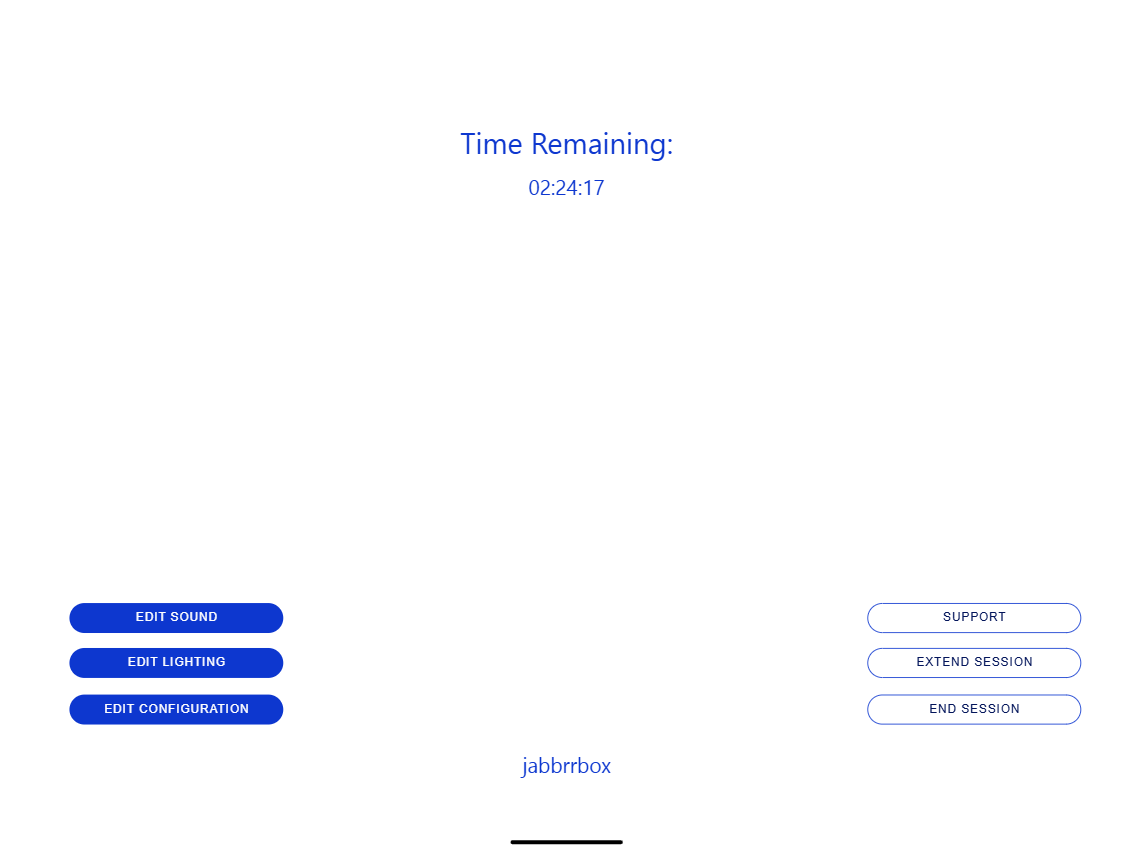
This page illustrates the static page while the user’s session is active. There are buttons available to revisit any decisions made earlier, edit the booking, or engage support. The transition from the previous page, intention-setting, to this, marks the start of the session and is one of the most crucial moments in the customer journey. As such the opportunity to auditorily signal this threshold represents a high value boost in user’s product sentiment and success.
The Work Session Start chime is essentially a simple D#maj7 chord that accentuates further the slow attack motif heard throughout jabbrrbox’s sonic redesign. This gentle arrival of sound represents the change in user mindset from transitory and active to still and prepared. Initially, I halved the BPM of the audio itself before any additional processing to warp the signal ever so slightly and bring out some delicate delays in the tone. These crystal-like oscillations reference the countless tasks and items the user is about to complete.
The auditory notification chime is also present and may be replaced by haptic-only delivery based on user preferences.
6 Conclusion Page
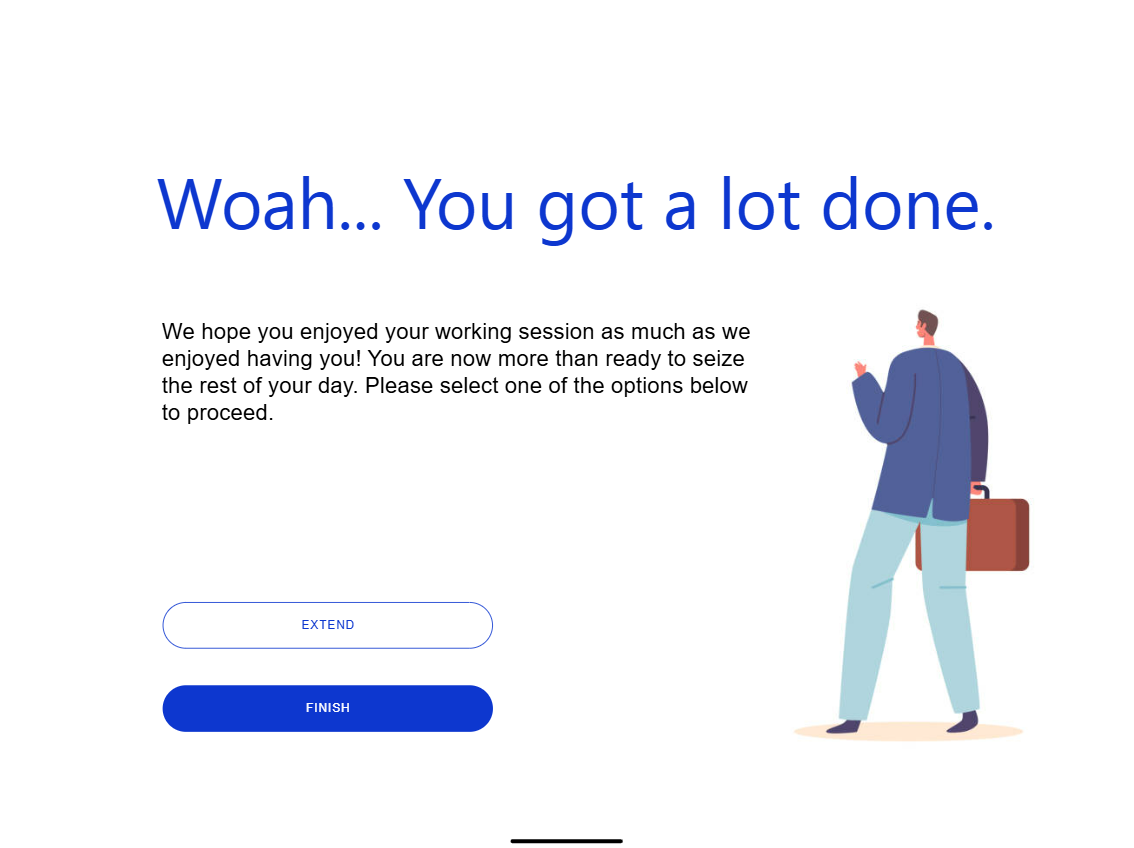
Similar to the aforementioned static page, the transition from an active working session to the shown conclusion page is one that should cement the desired brand sentiment of jabbrrbox in the mind of the user. This transition, enhanced by a change in lighting, should ease the user from a place of concentration back into a mindset where they are able to return to their other activities, such as traveling or socializing.
The Work Session End chime is the same D#maj7 chord as the Work Session Start but pitched down and with the melodic emphasis placed on the root rather than the 7th. This gives the impression of a winding-down, a turn towards resolution, as opposed to the chord shape that trends directionally upward.
Reflections
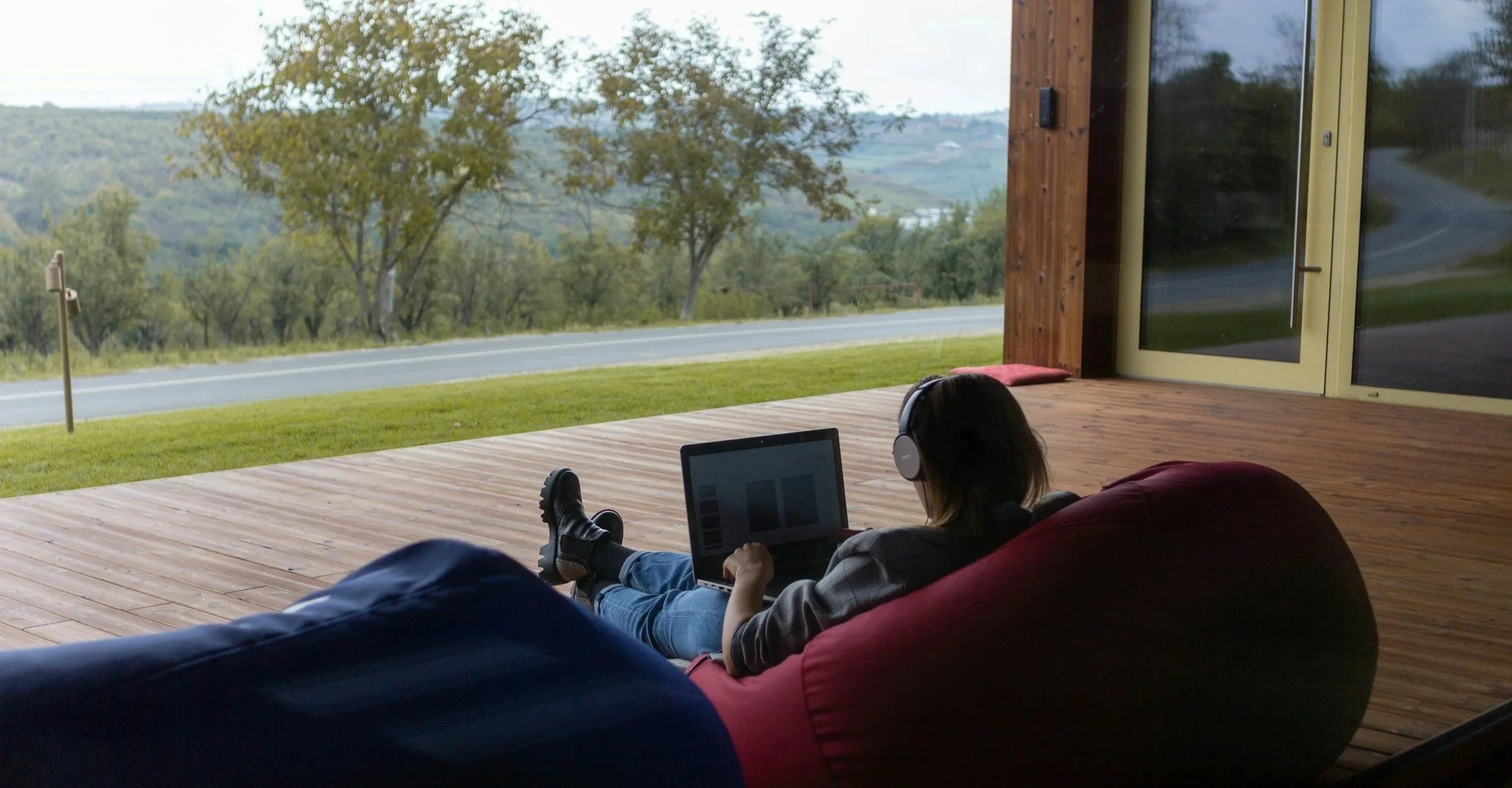
This project demonstrates how jabbrrbox can evolve from a functional workspace into a designed, sensory experience, where sound and haptics actively support focus, clarity, and user success. The pod environment becomes more intuitive, more legible, and increasingly premium by incorporating audio and haptic feedback as a core functionality. Each interaction is shaped to reinforce key user moments, from entry to deep work to exit.
This proposal introduces a cohesive sound language focused around a tonal center of D#, facilitating a reusable, mode-driven sound and haptic ecosystem, all of which can be implemented within the pod hardware present today. These additions require minimal visual UI changes while meaningfully improving call clarity, system awareness, and overall user flow. The result positions jabbrrbox as a leader in thoughtfully designed, high-performance work environments, no matter where you us.